
The Arto Hardy Family
Biomedical Innovation Hub

Welcome
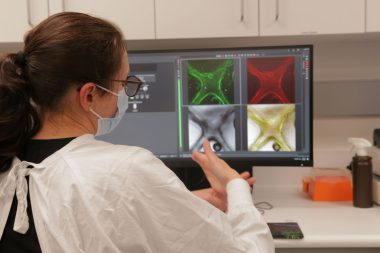
The Arto Hardy Family Biomedical Innovation Hub (BMIH) at Chris O’Brien Lifehouse (COBL) is a transformational research laboratory that bridges medical science, biology, engineering, and industry. With the unique advantage of being located within a cancer hospital, our scientists work directly with clinical teams to translate new discoveries into more effective treatments for people with cancer.
Led by a team of exceptional scientists and engineers, The Arto Hardy Family Biomedical Innovation Hub enables COBL to fast-track cutting edge research across multiple cancer types.
Chris O’Brien Lifehouse thanks the Arto Hardy family for their generosity, which has made this possible.
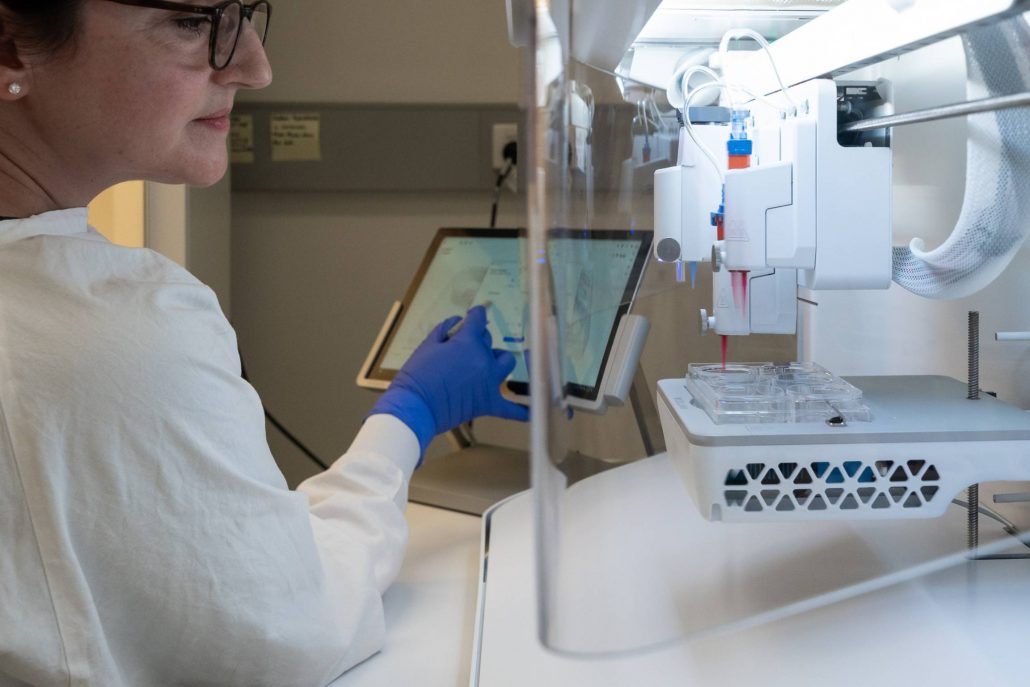
Meet Our Research Leads
The Arto Hardy Family Biomedical Innovation Hub strengthens the integration of research within the multidisciplinary teams at Chris O’Brien Lifehouse. Meet Arto Hardy Family Chair in Biomedical Innovation, Professor Jeremy Crook, and Senior Research Scientist, Dr Eva Tomaskovic-Crook, in the video below.
Research Milestones
January-August 2024
- Four new University of Sydney PhD candidates (Annie Li, Eitan Ben-Sefer, Aston Buffier and Will Lewin), and three Honours students (Joel Lummis, University of Sydney; Daniel Glinatsis, University of New South Wales; Maryam Simon, University of Wollongong) commenced projects in the Arto Hardy Family BMIH. Additionally, Aston Buffier and Will Lewin were both awarded Australian Government National Industry Linked PhD Program awards. The students are working on a range of projects relating to tissue engineering for laboratory-based tissue modelling (including bone, neural and tumour) and regenerative and cancer medicine.
“In supporting PhD and Honours students through the Arto Hardy Family Biomedical Innovation Hub, we harness the skill, knowledge, passion and commitment of exceptional young scientists and engineers. We support them in producing and publishing research of the highest calibre; we achieve a greater scope in our research program; and we secure the future of scientific research and advancements in cancer care.” Professor Jeremy Crook, Arto Hardy Family Chair in Biomedical Innovation
- We have initiated a new project in collaboration with Clinical Director of Tissue Pathology and Diagnostic Oncology (TPDO) at the Royal Prince Alfred Hospital (RPA), Professor Ruta Gupta. The aim of the project is to establish a real-time bioprinted oral cancer treatment screening pipeline between RPA and the Arto Hardy Family BMIH. More specifically, we will develop through pre-clinical research a quality assured process of 3D bioprinting models of patient primary oral cancer tissues received from TPDO for radiosensitivity and chemosensitivity testing. Once the pipeline is validated and ratified, the test results will be used to predict individual patient response to adjuvant therapy in clinically relevant time frames to tailor treatment, improve quality of life and survival in patients with oral cancer.
- We are pleased to report that building works has commenced to expand the PC2 Laboratory in the Arto Hardy Family BMIH. We anticipate the extension of the laboratory will be completed by October and we look forward to providing a further update on progress soon.
- In collaboration with the Chris O’Brien Lifehouse Integrated Prosthetics & Reconstruction team, we have commenced planning for first-in-human trials of Chris O’Brien Lifehouse’s artificial bone technology; 3D printed PEK. From our preclinical research, we expect the technology will provide new possibilities for bone repair following cancer surgery, and so the trial will be an important next step towards gaining regulatory approval for clinical use of the technology.
November – December 2023
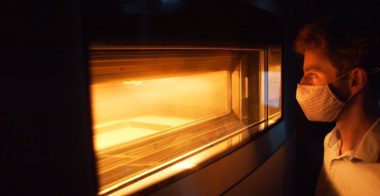
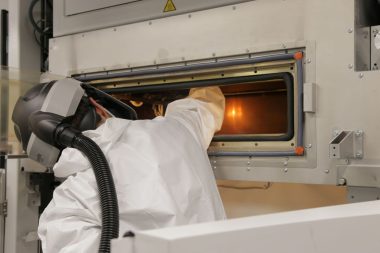
- A provisional patent application (Australian Provisional Patent Application, “Implants for Teeth and Bone”, Australian Provisional Patent Application No. 2023903710) was filed by Chris O’Brien Lifehouse on 17/11/2023. The technology relates to 3D printed thermoplastic poly-ether-ketone (PEK) jointly developed for artificial bone by the Chris O’Brien Lifehouse Arto Hardy Family BMIH and Integrated Prosthetics & Reconstruction teams.
- We received approval for the inclusion of LifePrin4D™ Radiotherapy Bolus as a Class 1 medical device on the Australian Government Therapeutic Goods Administration (TGA) Australian Register of Therapeutics Goods (ARTG; 428431). LifePrin4D™ Radiotherapy Bolus is a 3D printed device designed to improve radiotherapy of patients by reducing air gaps between the bolus and a patient’s skin surface, ensuring a more efficient and reproducible setup for each radiation treatment fraction, and improving the patient’s overall experience while being treated.
January 2022:
We partnered with Zeta Therapeutics to merge their expertise in nanotechnology with the Arto Hardy Family Biomedical Innovation Hub’s expertise in tissue modelling to develop new and personalised treatments for ovarian cancer.
April 2022:
We took a significant step in our work to develop 3D tumour tissue models by engineering living human brain organoids containing blood vessel-like structures. The aim is to create replicas of a patient’s healthy brain tissue with glioblastoma tumour in the laboratory so that we may better understand tumour biology and drug screening. Forming networks of capillaries and blood vessels within the tissue is crucial because it allows the organoids and tumours to grow and behave more like the tissues within a patient’s body.
June 2022:
We began a pre-clinical trial, working with Director of Head and Neck Cancer Research, Professor Jonathan Clark AM, in which we use stem cells taken from adipose tissue to create a ‘bio ink’ that we 3D-print to form a natural bone-like prosthetic. These prostheses are used to reconstruct areas where bone has been removed in cancer surgery.
July 2022:
We finalised the implementation of a new Intellectual Property (IP) policy and framework at Chris O’Brien Lifehouse. This was an important step to ensure discoveries made and products developed across the hospital and within our collaborations are protected, and that they are fast tracked through clinical trials and to the clinic to benefit patients. It is also important to ensure the long-term sustainability of the Arto Hardy Family Biomedical Innovation Hub.
November 2021:
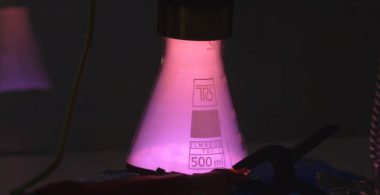
We partnered with RPA Hospital Institute of Academic Surgery and the Chris O’Brien Lifehouse Integrated Prosthetics & Reconstruction team (lead by Director of Head and Neck Cancer Research and Lang Walker Family Foundation Chair in Head and Neck Cancer Reconstructive Surgery, Professor Jonathan Clark AM), in a world-first research collaboration – combining 3D- printing with advanced materials and technologies for bioactivation. This means that we 3D-print a scaffold using a high-performance thermoplastic (called PEK or poly-ether-ketone) and then apply our unique, proprietary surface treatment called Plasma Ion Immersion Implantation to encourage the growth of bone cells on the 3D-printed scaffold. We expect this research will open up new possibilities for bone repair and regeneration following cancer surgery.
Novel biomedical research can transform cancer treatment
In March 2023 we received a Tour de Cure Grant for glioblastoma research.
The grant was enabled by matched funding from the Arto Hardy Family Biomedical Innovation Grant. The amount awarded by Tour de Cure was $200,000 per annum for 3 years. Glioblastoma is the most common and aggressive brain cancer in adults and remains incurable. Along with access to cutting-edge research infrastructure established at the BMIH, the grant will support research for the development of more targeted, more effective, lower risk, and less toxic treatment of glioblastoma. Ultimately, we aim to give patient’s a treatment option that offers a far better chance of survival.
August 2023, in the media.
The Arto Hardy Family Biomedical Innovation Hub was highlighted in a Research Australia INSPIRE magazine article.
In 2022, the Arto Hardy Family Biomedical Innovation Hub was awarded a Medical Research Grant from the Ian Potter Foundation.
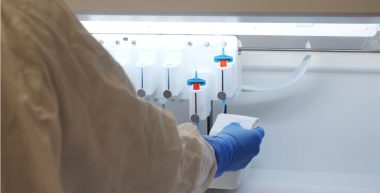
This grant supported the purchase of an important piece of technology within the Arto Hardy Family Biomedical Innovation Hub and to our work in tumour modelling and diagnostics: a BIORAD QX200 Automated Droplet Digital Polymerase Chain Reaction System.
The BIORAD QX200 enables us to compare and understand normal, disease and treatment-related nucleic acid molecules in tissue when treating patients with cancer. It creates tens of thousands of data points from a single tissue sample. This helps to more accurately understand mutation, gene expression and rare sequences in DNA, which will translate into more informed tissue reconstruction for regenerative medicine therapy.
2023-2028
- 2024-2028 – NHMRC Centres of Research Excellence Grant 2024602 –The Centre of Research Excellence for Applied Innovations in Oral Cancer. $2,500,000.
- 2023 -2025 – Tour de Cure Matching Grant – KINEXUS ultra+ Rotational Rheometer for personalised cancer medicine. $25,000.
- 2023 – 2025 – Tour de Cure Senior Researcher Grant –3D printed bolus for better curative and preventative personalized cancer medicine. $50,000.
- 2023 – 2024 – University of Sydney External Research Collaboration Seed Funding – Customisable, radiotranslucent, antibacterial and osseointegrative 3D-printed polymer bone implants. $30,000.
- 2023 – Garnett Passe & Rodney Williams Memorial Foundation 2023 Conjoint Grant – Bio-printed adipose derived stem cells for engineering vascularized bone tissue within an in vivo bioreactor. $125,000.
2022
- SurFebruary Cancer Research Fund grant – 3D-bioprinting with glioblastoma ‘ink’: engineering patient-specific brain tumours for high throughput drug screening and individualised therapy, $96,600.
- SurFebruary Cancer Research Fund grant – Development of an ex vivo perfusion bio-reactor to maintain periosteum for bone reconstruction, $50,000
- Sydney Cancer Institute Seed Grant Scheme – Point-of-care development of personalised 3D-printed boli for radiotherapy patient, $25,000.
- ANZHNCS Research Foundation grant (Reconstructive Surgery Fund) – Bio-printed adipose derived stem cells for engineering vascularized bone tissue within an in vivo bio-reactor, $10,000.
Publications
James E, Tomaskovic-Crook E, Crook JM (2024) Engineering 3D scaffold-free nanoparticle-laden stem cell constructs for piezoelectric enhancement of human neural tissue formation and function. Advanced Science. doi: 10.1002/advs.202310010
Xin H, Ferguson BM, Wan B, Al Maruf DSA, Lewin W, Cheng K, Kruse HV, Leinkram D, Parthasarathi K, Wise I, Froggatt K, Crook JM, McKenzie DR, Li Q, Clark J (2024) A preclinical trial protocol using an ovine model to assess scaffold implant biomaterials for repair of critical-sized mandibular defects. ACS Biomaterials Science & Engineering. doi.org/10.1021/acsbiomaterials.4c00262
Al Maruf DSA, Xin H, Cheng K, Garcia aG, Mohsen MD, Ben-Sefer E, Tomaskovic-Crook E, Crook JM, Clark JR (2024) Bioengineered cartilaginous grafts for repairing segmental mandibular defects. J Tiss. Eng. doi:10.1177/20417314241267017
Kruse HV, Chakraborty S, Chen R, Kumar N, Yasir M, Lewin WT, Suchowerska N, Willcox MDP, McKenzie DR (2024) Protecting orthopaedic implants from infection: Antimicrobial peptide Mel4 is non-toxic to bone cells and reduces bacterial colonisation when bound to plasma ion-implanted 3D-printed PAEK polymers. Cells. 13(8): 656. doi.org/10.3390/cells13080656
Ghosh Y, Xin H, Al Maruf DSA, Cheng K, Wise I, Burrows C, Gupta R, Cheung V, Wykes J, Leinkram D, Froggatt C, Lewin W, Kruse H, Tomaskovic-Crook E, McKenzie D, Crook JM, Clark J (2024) Novel sheep model to assess critical-sized bone regeneration with periosteum for in-vivo bioreactors. Tissue Engineering Part C. doi: 10.1089/ten.TEC.2023.0345
Wu C, Wan B, Al Maruf DSA, Cheng K, Xin H, Fang J, Xu Y, Lewin WT, Crook JM, Clark J, Steven G, Li Q (2024) Dynamic optimisation for subject-specific tissue scaffolds using machine learning techniques. Computer Methods in Applied Mechanics and Engineering. 425, 116911. doi.org/10.1016/j.cma.2024.116911
Chi, Do Duc, Tran Ngoc Toan, and Robin Hill. “A multi-detector comparison to determine convergence of measured relative output factors for small field dosimetry.” Physical and Engineering Sciences in Medicine (2023): 1-9.doi: 10.1007/s13246-023-01351-3
Ludwig TE, Andrews PW, Barbaric I, Benvenisty N, Bhattacharyya A, Crook JM, Daheron LM, Draper JS, Healy LE, Huch M, Inamdar MS, Jensen KB, Kurtz A, Lancaster MA, Liberali P, Lutolf MP, Mummery CL, Pera MF, Sato Y, Shimasaki N, Smith AG, Song J, Spits C, Stacey G, Wells C, Zhao T, Mosher JT (2023) ISSCR standards for the use of human stem cells in basic research. Stem Cell Reports. Stem 18: 1744–1752. doi: 10.1016/j.stemcr.2023.08.003
Al Maruf DSA, Cheng K, Xin H, Cheung VKY, Foley M, Wise I, Lewin W, Kruse HV, Froggatt C, Wykes J, Parthasarathi K, Leinkram D, Howes D, Suchowerska N, McKenzie DR, Gupta R, Crook JM, Clark JR (2023) A comparison of in vivo bone tissue generation using calcium phosphate bone substitutes in a novel 3D printed four-chamber periosteal bioreactor. Bioengineering. 10(10):1233. doi: 10.3390/bioengineering10101233
Xin H, Tomaskovic-Crook E, Al Maruf DSA, Cheng K, Wykes J, Manzie TGH, Wise SG, Crook JM, Clark J (2023) From free tissue transfer to hydrogels: a brief review on the application of periosteum in bone regeneration. Gels, 9(9):768. doi: 10.3390/gels9090768.
Luni C., Urciuolo A, Crook JM, Gentile C (2023) Editorial: New trends in biomimetic tissue and organ modelling. Frontiers in Medical Technology. 5:1182828. doi: 10.3389/fmedt.2023.1182828
Xin H, Romanazzo S, Tomaskovic-Crook E, Mitchell TC, Hung JC, Wise SG, Cheng K, Al Maruf DSA, Stokan MJ, Manzie TGH, Parthasarathi K, Cheung VKY, Gupta R, Ly M, Pulitano C, Wise IK, Crook JM, Clark JR (2023) Ex Vivo Preservation of Ovine Periosteum Using a Perfusion Bioreactor System. Cells. 12(13):1724. org/10.3390/cells12131724
Higginbottom SL, Tomaskovic-Crook E, Crook JM (2023) Considerations for the modelling of diffuse high-grade gliomas and development of clinically relevant therapies. Cancer and Metastasis Reviews. 42, 507–541 (2023). doi.org/10.1007/s10555-023-10100-7
Goddard E, Tomaskovic-Crook E, Crook JM, Dodds S (2023) Human Brain Organoids and Consciousness: Moral Claims and Epistemic Uncertainty. Organoids. 2(1), 50-65. https://doi.org/10.3390/organoids2010004.
Chen Z, Liu X, You J, Tomaskovic-Crook E, Yue Z, Talaei A, Sutton G, Crook JM, Wallace G J (2023) Electro-compacted Collagen For Corneal Epithelial Tissue Engineering. Biomed Mat Res: Part A. https://doi.org/10.1002/jbm.a.37500
Tomaskovic-Crook E, Higginbottom SL, Zang BB, Bourke J, Wallace GG, Crook JM (2023) Defined, simplified, scalable and clinically compatible hydro-gel-based production of human brain organoids. Organoids. 2(1): 20-36. https://doi.org/10.3390/organoids2010002
Gonzales, L. I. S. A., et al. (2023). “An omics approach to delineating the molecular mechanisms that underlie the biological effects of physical plasma.” Biophysics Reviews 4(1): 011312.
Zhang C, Lewin W, Cullen A, Thommen D, Hill R (2023) Evaluation of 3D-printed bolus for radiotherapy using megavoltage X-ray beams. Radiological Physics and Technology:1-8 https://doi.org/10.1007/s12194-023-00727-0
International Society for Stem Cell Research (ISSCR) Standards Taskforce (2023) Standards for Human Stem Cell Use in Research. https://www.isscr.org/standards-document
Al Maruf, D.A., Ghosh, Y.A., Xin, H., Cheng, K., Mukherjee, P., Crook, J.M., Wallace, G.G., Klein, T.J. and Clark, J.R., 2022. Hydrogel: a potential material for bone tissue engineering repairing the segmental mandibular defect. Polymers, 14(19), p.4186.
https://pubmed.ncbi.nlm.nih.gov/36236133/
Li, J., Liu, X., Crook, J.M. and Wallace, G.G., 2022. Development of 3D printable graphene oxide based bio-ink for cell support and tissue engineering. Frontiers in Bioengineering and Biotechnology, 10, p.994776.
https://www.ncbi.nlm.nih.gov/pmc/articles/PMC9641498/
Tomaskovic-Crook, E., Guerrieri-Cortesi, K. and Crook, J.M., 2021. Induced pluripotent stem cells for 2D and 3D modelling the biological basis of schizophrenia and screening possible therapeutics. Brain Research Bulletin, 175, pp.48-62.
https://www.sciencedirect.com/science/article/abs/pii/S0361923021002045?via%3Dihub